We need to break the notion of “discovery” away from the myth that some system will find interesting stuff and hand it to us without us having to do any work.

As the Internet continues to increasingly mirror how things work in the real world, we have to abandon the idea that good things will come to us on an endless conveyer belt. Unlike spam calls, junk mail, and advertisements the things that we actually care about require us to find them and are not produced at a constant rate.

We are not uplifted by competing to achieve superior speed and efficiency. The sales pitch of GenAI is that the technology provides a shortcut to writing a song, making a movie, understanding a book, but these promises are illusions.


A simulacra of human virtuosity is not what we need. We need each other. We need signs of life about us. We need to know that we are not alone. And this is something we must consider not just in relation to the singular artifact, but also in relation to our environment. In a time of acute loneliness, the proliferation of AI-generated content seems not unlike an act of pollution, compromising the integrity of the social ecosystem.


I think, probably, the amount of delight we experience is directly related to the amount of control we’re willing to not have.

I feel like this is particularly fantastic advice for being delighted by music, movies, tv, games, books, and other creative media. Delight can only surprise you when you’re chasing what interests you and not following the reviews of algorithms and strangers.


But we didn’t take any photos of that bullock. You rarely do, when something comes of nowhere and flabbergasts you with its simplistic beauty. Everything moves on, a different picture moves in to occupy the frame, as the rules of the universe dictate, and it’s often in those moments, directly after the flabbergasting, beautiful thing has been witnessed, when the bittersweet fact of that seems most apparent.


It is quite obvious that the human race has made a queer mess of life on this planet. But as a people we probably harbor seeds of goodness that have lain for a long time waiting to sprout when the conditions are right. Man’s curiosity, his relentlessness, his inventiveness, his ingenuity have led him into deep trouble. We can only hope that these same traits will enable him to claw his way out.


Putting small things into words can create connection - The Reader recognizes a feeling or a moment that seemed too insignificant to dwell in til they discovered the writer was dwelling in it too. In my experience, little can be translated from the life’s monumental joys and tragedies. An extraordinary love rendered ordinary when you name it. Or else the dull, incurable ache that a life could have gone differently, but didn’t.


Major inventions don’t have some inherent nature that tends towards improving life or enriching humanity. More often than not, they worsen life and deepen inequality because elites hoard their benefits and tightly dictate the terms of technological deployment. So when technological breakthroughs do yield positive outcomes, it’s because those with power are forced into an agreement that distributes resources more equally.


There’s no accident that there’s a lot of overlap between the book banners and the people who want to automate creativity using fake AI. The creative process is full of trial, uncertainty, and error in dialogue with other artists. That is basically antithetical to certainty and authority.


A “user-centered” approach to design has been replaced by what [Jarrett Fuller] has taken to calling a “corporation-centered” approach. Rather than optimizing for the user’s experience, it optimizes for the extraction of profit. If Spotify succeeds at turning us all into passive listeners, then it doesn’t really matter which content the platform licenses. As Fuller put it, “It’s about ‘How do you get through as much music as you can so you keep paying for it?’" -Why I Finally Quit Spotify

Quitting Spotify has been a huge improvement to my music listening.


We need to diversify the kinds of people who make software, the kinds of problems they’re solving, and the philosophies and worldviews that govern how they build. Putting every software creator inside a tiny, privileged bubble that’s awash in VC cash and obsessed with hierarchical status games isn’t going to give us novel, “innovative”, or diverse software that serves the needs of everyone.


Remote work isn’t, by definition, better or worse than IRL work. But it is different, and it is a necessary adaptation in an era marked by climate change and the slow collapse of long-neglected infrastructures. It’s past time to engage with its flaws directly, instead of always harking back to a fabricated office history we never lived in and cannot return to.

I can’t overstate how beneficial working fully remote for the past four years has been for myself and my family.


Part of what makes art special is that it’s difficult to make, even with all the tools right in front of you. It takes practice, it takes skill, and every time you do it, you expand on that skill. […] Generative AI is only about the end product, but it won’t teach you anything about the process it would take to get there.

  • Drew Gooden, AI is Ruining the Internet YouTube

Gen AI is a bad middle-manager trying harder than ever to convince people that its stolen output isn’t bad.


I definitely do not want small talk and relationships outsourced to server farms. This stuff shouldn’t feel hard or taxing; it’s what our presence here on Earth is mostly made up of. The effort, the clumsiness, and the time invested are where humanity is stored.


Ecology knows that shifting baselines dampen collective urgency and deepen generational divides. People who care about internet monoculture and control are often told they’re nostalgists harkening back to a pioneer era. It’s fiendishly hard to regenerate an open and competitive infrastructure for younger generations who’ve been raised to assume that two or three platforms, two app stores, two operating systems, two browsers, one cloud/mega-store and a single search engine for the world comprise the internet.

Twitter’s dead carcass could feed many new blooms.


I think a lot about how we as a culture have turned “forever” into the only acceptable definition of success. (…) Something can be good, and also end, and that thing was still good. And it’s okay to be sad that it ended, too. But the idea that anything that ends is automatically less than this hypothetical eternal state of success. I don’t think that’s doing us any good at all.

Defining success as “do it forever” is a very capitalistic view of the human creative process.


Most truths are like that, easy to hear or recite, hard to live in the sense that slowness is hard for most of us, requiring commitment, perseverance, and return after you stray. Because the job is not to know; it’s to become. A sociopath knows what kindness is and how to weaponize it; a saint becomes it.

Rebecca focuses this around political change but I feel like it applies to personal growth and development just as well. Want to loose weight? Write or draw more? Be a better friend? Take the slower, grace-filled path of becoming.


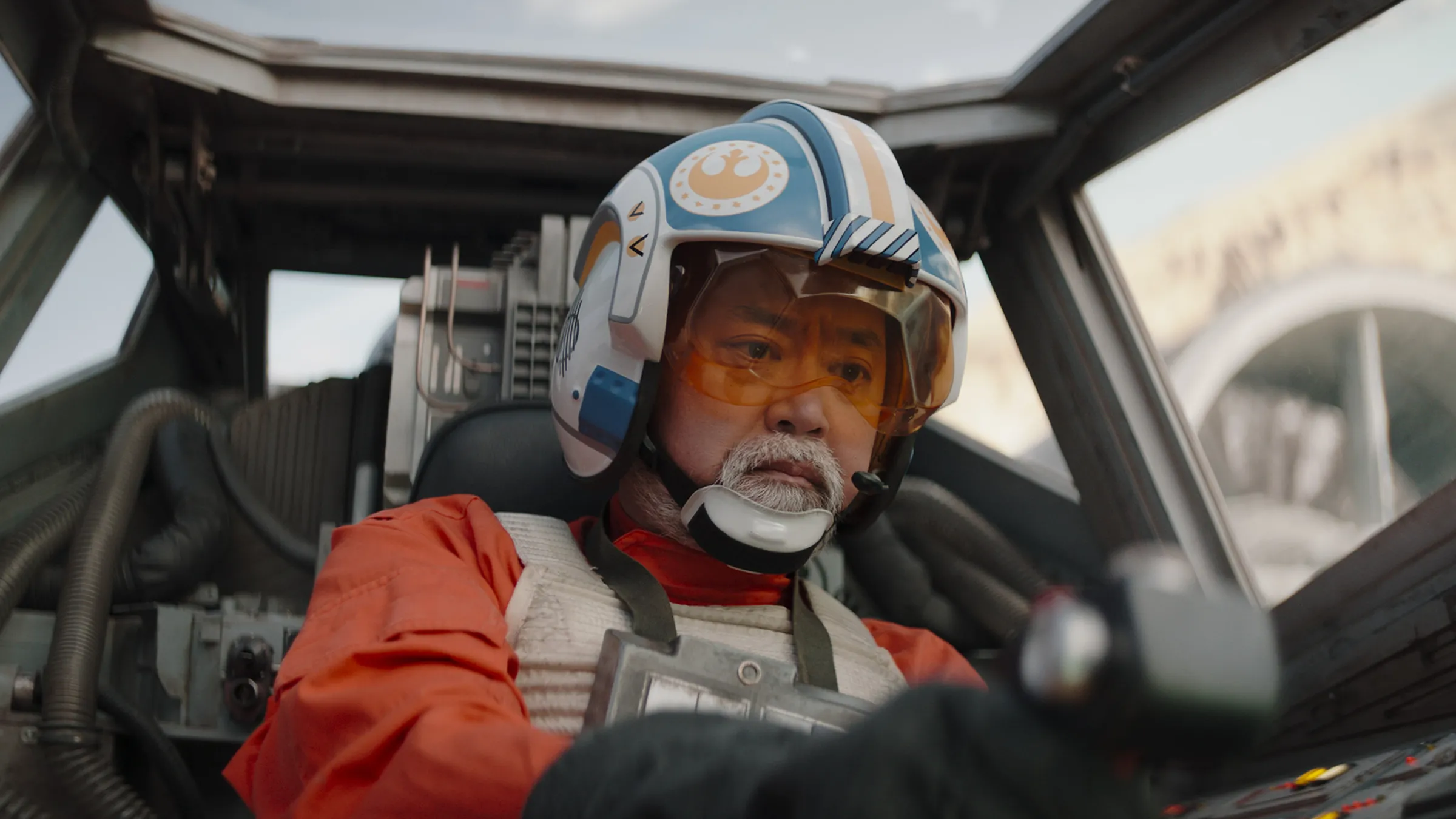
Paul Sun-Hyung Lee as Carson Teva in The Mandalorian

True fandom is sharing your love, not judging. It’s about expanding, growing, and learning. And if you’re not enjoying it, why are you a fan? I don’t see how you can call yourself a fan if you’re focused on being miserly just hoarding every scrap of knowledge, because then, when you die, it dies. You want this to go on, right?

← Newer Older →